How Product Image Depth Influences AOV in Shopify Stores
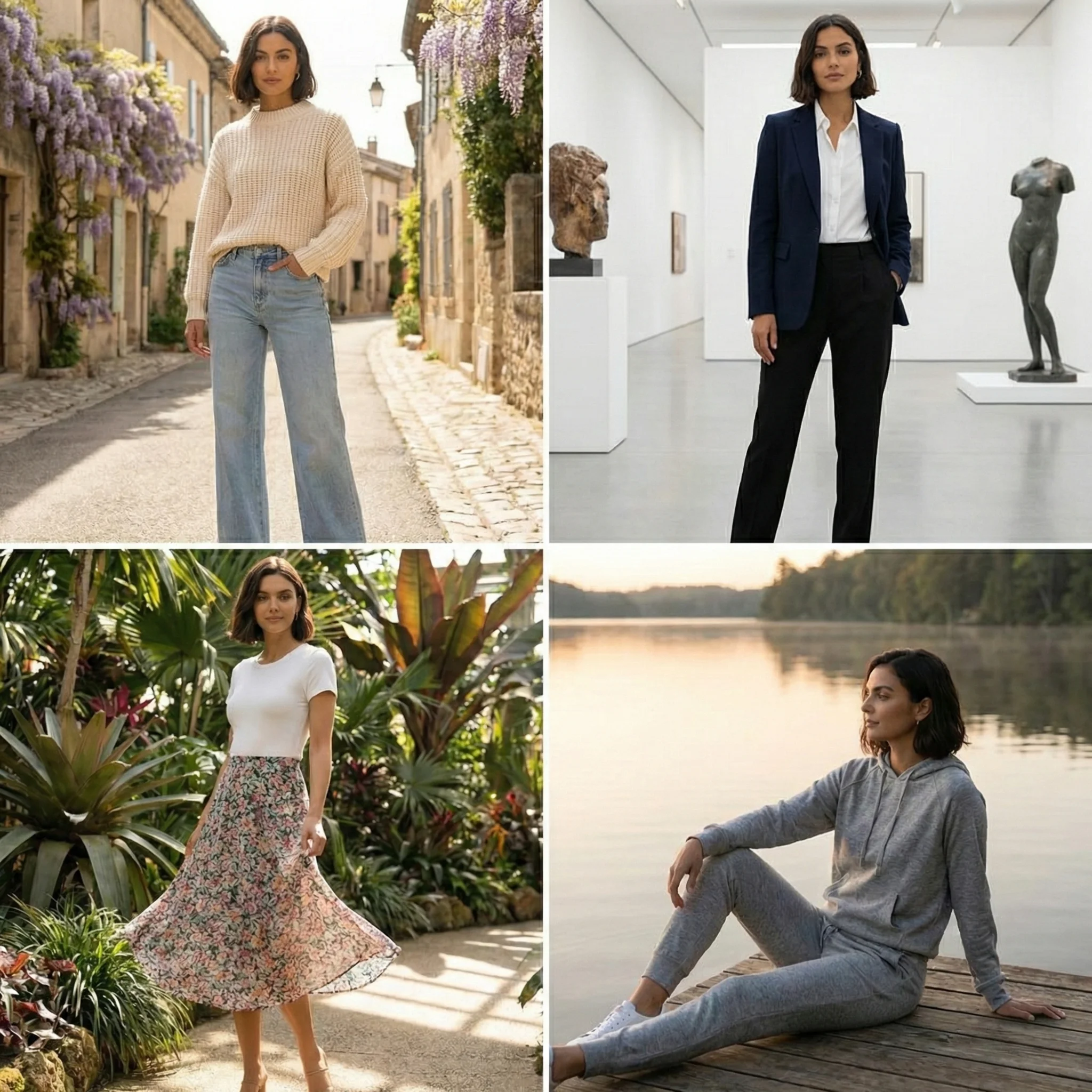
Most Shopify fashion brands think about product images in relation to conversion rate.
Very few connect image depth to average order value.
That is a missed lever.
Image depth does not simply increase confidence in a single SKU. When structured correctly inside Shopify’s product page architecture, it influences perceived completeness, styling possibility, and cross-product attachment behavior.
AOV is not only a pricing or bundling outcome. It is often a visual outcome.
What “Image Depth” Actually Means
Image depth is not the number of images.
It is the strategic layering of visual information that moves a shopper from evaluation to expansion.
Depth includes:
- Multiple angles
- Fit context across body types
- Close-up fabric detail
- Lifestyle context
- Styling combinations
- Secondary product visibility
- Variant-specific realism
In Shopify, this depth lives inside a constrained vertical scroll environment. Every additional image competes with:
- Product description
- Reviews
- Cross-sell sections
- Add to Cart visibility
- Sticky purchase elements
Depth must be intentional.
The Relationship Between Image Depth and Perceived Completeness
Fashion purchases are rarely isolated.
A shopper viewing a jacket is also evaluating:
- What to wear under it
- What bottoms pair with it
- How it fits within their existing wardrobe
- Whether it solves a seasonal gap
When product images visually answer adjacent questions, perceived completeness increases.
Perceived completeness influences:
- Willingness to add complementary items
- Reduced hesitation at checkout
- Higher perceived value per order
Inside Shopify, this effect is amplified by how themes structure recommendations and cart drawers.
Where Image Depth Increases AOV in Shopify
1. Styling Context That Shows Adjacent Products
If your PDP images include full outfits, you create a pre-bundled mental model.
The shopper does not need to imagine the combination. They see it.
When Shopify’s product recommendations section appears below the gallery, the shopper is already primed to recognize those complementary pieces.
This increases:
- Recommendation click-through rate
- Cross-sell attachment rate
- Cart drawer expansion behavior
The key is consistency. If the styled item is shown in the gallery but not easily discoverable through internal linking or collection tagging, you create friction instead of expansion.
Operational requirement:
- Ensure styled pieces are linked via Shopify product recommendations or manually curated sections.
- Maintain consistent image styling across related SKUs.
2. Variant Depth That Encourages Multi-Color Purchases
In fashion, AOV often increases through multiple color purchases.
Variant image depth influences this.
If each color variant has:
- Dedicated images
- Consistent lighting
- Clear differentiation
- Close-up detail
Shoppers are more confident purchasing more than one.
However, Shopify’s default variant switching can create friction if:
- The gallery resets unpredictably
- Variant images are not grouped cleanly
- Thumbnails mix all colors together
Operational structure:
- Map images explicitly to each variant
- Avoid mixing variant images in the default gallery view
- Ensure swatch selection clearly updates hero images without scroll disruption
When color exploration feels effortless, multi-variant purchases increase.
3. Detail Shots That Reduce Hesitation at Higher Price Points
Higher AOV often correlates with higher-priced items.
At elevated price points, shoppers look for:
- Stitching quality
- Fabric density
- Lining structure
- Closure details
- Texture realism
If image depth does not support price perception, shoppers hesitate.
In Shopify, zoom functionality and resolution handling matter.
If compression degrades fine detail, you weaken premium perception.
Operational considerations:
- Upload sufficiently high-resolution files
- Test zoom clarity across desktop and mobile
- Monitor load speed impact relative to perceived quality
Image depth must reinforce price positioning.
When Image Depth Reduces AOV
More images do not automatically increase order value.
Excess depth can:
- Push cross-sell sections too far below the fold
- Fatigue mobile users
- Delay Add to Cart visibility
- Create analysis paralysis
In Shopify themes with long vertical galleries, excessive depth increases scroll friction before shoppers reach:
- Bundle offers
- Frequently bought together blocks
- Upsell modules
If gallery progression rate drops after image five or six, additional images may be harming overall order expansion.
Measure:
- Gallery completion rate
- Scroll depth before Add to Cart interaction
- Recommendation section visibility rate
Depth must serve clarity, not inflate volume.
The Role of Image Order in AOV
Order influences expansion behavior.
Recommended structural flow inside Shopify PDPs:
- Hero clarity image
- Fit context image
- Styling context image showing complementary products
- Detail close-up
- Variant-specific differentiator
- Lifestyle reinforcement
This sequence:
- Establishes confidence
- Introduces outfit logic
- Reinforces quality
- Encourages exploration
If styling context appears too late, the cross-sell opportunity weakens.
If it appears too early without product clarity, it distracts from the primary SKU.
Order is leverage.
Connecting Image Depth to Measurable Shopify Metrics
To evaluate impact on AOV, monitor:
- AOV segmented by product category
- Cross-sell attachment rate
- Recommendation click-through rate
- Cart drawer item count
- Variant selection frequency
- Gallery progression depth
Combine this with traffic segmentation:
- Paid traffic often requires more depth
- Returning customers may need less
- Mobile users tolerate fewer images before fatigue
Depth strategy should not be uniform across all collections.
Paid Traffic Amplifies the Effect
When scaling paid acquisition, image depth has multiplied influence.
Why?
Paid traffic often lands directly on PDPs. There is less collection exploration beforehand.
If the gallery:
- Shows styling context clearly
- Reduces ambiguity quickly
- Reinforces quality perception
Shoppers are more willing to add complementary items immediately.
If the gallery is shallow, AOV is constrained by single-item evaluation.
Before scaling paid campaigns, audit:
- Whether styling images are present
- Whether adjacent products are discoverable
- Whether cross-sell sections appear before excessive scroll
This connects directly to traffic efficiency.
Building an Image Depth Framework by Category
Not every category requires the same depth.
Example:
Basic tees:
- Fewer angles
- Strong color differentiation
- Clear fit representation
Outerwear:
- More detail shots
- Layering examples
- Texture emphasis
Occasionwear:
- Lifestyle context
- Close-up embellishment detail
- Multiple lighting conditions if relevant
Within Shopify, structure templates by category rather than applying identical gallery depth across all products.
Use product templates strategically.
Image Depth as Revenue Infrastructure
When image depth is treated as aesthetic enhancement, AOV improvement is accidental.
When it is treated as structural revenue infrastructure, it becomes predictable.
In Shopify stores, AOV increases when:
- Images visually pre-bundle outfits
- Variants feel easy to explore
- Detail reinforces price
- Cross-sell modules align with gallery context
Image depth is not about adding more photos.
It is about expanding purchase scope through visual clarity and structured exploration.
If your average order value is stagnant, evaluate the gallery before adjusting pricing, discounts, or bundles.
In fashion ecommerce, expansion begins with what the shopper sees.
Transform your fashion photography!!
Start Creating with AIRead Next
How Fashion Product Images Affect Return Rates (And How to Fix It)
Returns are one of the most expensive and avoidable problems in fashion ecommerce. They reduce margi...
How to Launch a Clothing Line Without Expensive Photoshoots
Launching a clothing line is an exciting milestone, but for many fashion founders, professional phot...

How to Track Product Image Interaction Data Inside Shopify
Most Shopify fashion brands evaluate product imagery using one metric: conversion rate. That is ins...