The Order of Images That Maximizes Conversion on Fashion Product Pages
For fashion ecommerce, conversion does not depend on how many product images you show or how visually impressive they are. It depends on whether images appear in the right order, matching how shoppers evaluate risk, fit, and value.
Most fashion brands upload images based on availability or aesthetics. High-performing stores structure images based on buyer psychology. This article breaks down the exact image sequence that maximizes conversion on fashion product pages and explains why order matters more than most sellers realize.
Why Image Order Matters More Than Image Quality Alone
Fashion shoppers do not evaluate product images randomly. They follow a predictable cognitive process:
- Can I quickly understand what this product is?
- Does it look legitimate and trustworthy?
- Can I imagine how it will look on me?
- Does it meet my expectations for fit, fabric, and quality?
- Is there anything here that increases risk or uncertainty?
If images do not answer these questions in the correct order, shoppers hesitate or leave, even when the images themselves are technically strong.
Conversion problems often come from misordered clarity, not poor visuals.
The Ideal Image Order for Fashion Product Pages
Below is the sequence that consistently aligns with buyer behavior across apparel categories.
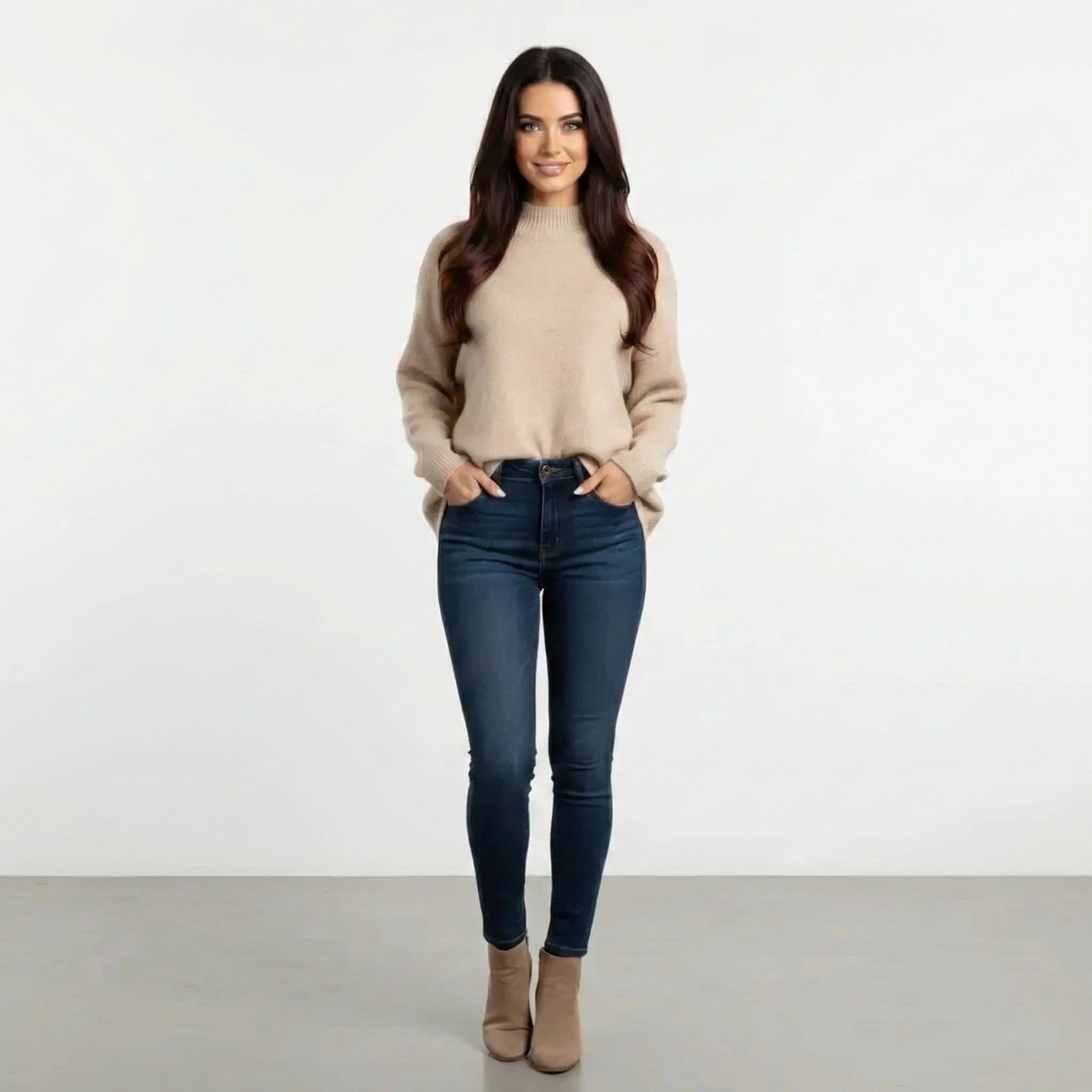
Image 1: Clear Primary Product View
Purpose: Immediate recognition and trust
The first image should answer one question instantly:
What exactly is this product?
Requirements:
- Front-facing or three-quarter view
- Neutral background
- Accurate color representation
- No dramatic poses, props, or cropping
This image is not about creativity. It is about eliminating ambiguity. Shoppers decide whether to continue scrolling within seconds. If the primary image is unclear or overly styled, the product already feels risky.
Common mistakes:
- Lifestyle shots as the first image
- Cropped details without context
- Angles that hide structure or silhouette
Image 2: On-Body or Contextual Fit View
Purpose: Mental substitution and self-identification
Once shoppers understand what the product is, they want to know how it looks when worn.
This image should:
- Show the full garment on a model or mannequin
- Clearly communicate length, proportions, and drape
- Use a neutral, realistic pose
At this stage, shoppers are asking, “Would this work for someone like me?”
Overly dynamic poses or extreme styling reduce clarity and slow decision-making.
Image 3: Alternate Angle or Back View
Purpose: Completeness and transparency
After imagining the product on themselves, shoppers look for confirmation that nothing is being hidden.
This image should:
- Show the back or side of the garment
- Reveal closures, seams, and structure
- Reduce suspicion about unseen details
Missing this image often creates subconscious doubt, even if shoppers cannot articulate why.
Image 4: Fabric and Texture Detail
Purpose: Tactile reassurance
Fashion ecommerce lacks physical touch. Detail images compensate for this absence.
Effective fabric images:
- Show texture at a natural scale
- Avoid heavy filters or excessive sharpening
- Reflect true material weight and finish
This is where many returns originate. When fabric expectations are wrong, disappointment is guaranteed.
Image 5: Fit-Specific or Use-Case View
Purpose: Objection handling
This image answers common silent questions, such as:
- How does it fit at the waist or shoulders?
- How does it look when moving?
- How does it sit on different body types?
Depending on the product, this could be:
- A close-up of fit-critical areas
- A secondary model with a different body shape
- A motion-based image that shows drape
This image reduces hesitation late in the decision process.
Image 6 and Beyond: Lifestyle or Brand Expression
Purpose: Emotional reinforcement, not explanation
Lifestyle images should come after clarity is established.
At this stage, shoppers already understand the product. Lifestyle imagery enhances desire but should never introduce new information or confusion.
Used too early, lifestyle images distract. Used later, they reinforce confidence.
Why This Order Converts Better
This sequence mirrors how buyers reduce risk:
- Clarity before emotion
- Accuracy before aspiration
- Transparency before storytelling
High-converting fashion product pages feel calm, confident, and predictable. They do not force shoppers to search for answers.
How This Order Reduces Bounce Rates and Returns
When images appear in the wrong order:
- Shoppers scroll erratically
- Questions remain unanswered
- Expectations form incorrectly
When images follow a logical evaluation path:
- Shoppers progress smoothly
- Confidence builds incrementally
- Purchases feel safer
This does not just improve conversion rates. It directly reduces post-purchase regret and returns.
How to Audit Your Existing Product Pages
Ask these questions:
- Does the first image clearly explain the product without context?
- Does the second image help shoppers imagine themselves wearing it?
- Are key details shown before lifestyle imagery appears?
- Are there any unanswered visual questions?
If the answer to any of these is no, image quality is not the problem. Image order is.
Final Takeaway
Fashion ecommerce conversion is not driven by having more images or more creative images. It is driven by showing the right image at the right moment in the buyer’s evaluation process.
Brands that understand this do not just look better. They sell with less friction.
Transform your fashion photography!!
Start Creating with AIRead Next
Managing Variant Image Logic at Scale in Shopify Catalogs
Variant complexity is one of the most underestimated conversion risks in Shopify fashion stores. As...

Why Fashion Shoppers Abandon Product Pages Even When Images Look “Good”
Many fashion ecommerce teams assume that if product images are high resolution, professionally shot,...
Accuracy vs Speed: The Core Tradeoff in AI Fashion Imagery
AI fashion imagery promises speed. Faster launches, quicker iteration, lower production friction. Fo...