Flat Lay vs On-Model Photos: What Converts Better for Fashion Ecommerce?
Choosing the right product image style is one of the most important decisions fashion ecommerce brands make. Flat lay photos and on-model images are both widely used, yet they serve very different purposes and influence buyer behavior in distinct ways.
This article compares flat lay and on-model product photography through the lens of conversion performance, buyer psychology, and platform behavior. By the end, you will know when each approach works best and how to combine them to increase conversions while reducing returns.
Why image style directly impacts conversion rates
Fashion shoppers make decisions visually. They cannot try items on or feel fabric, so images must replace the in-store experience.
Product images influence:
- Click-through rates from collection pages
- Time spent on product pages
- Size and fit confidence
- Purchase decisions
- Post-purchase satisfaction
The choice between flat lay and on-model photography determines how clearly these questions are answered.
What flat lay photography does well
Flat lay photography presents garments laid out on a flat surface, typically shot from above.
Strengths of flat lay images
Flat lay photos are effective for:
- Showing design details and prints clearly
- Highlighting color accuracy
- Maintaining consistent catalog layouts
- Keeping production costs low
They work especially well for accessories, graphic-heavy pieces, and minimalist brands that prioritize clean presentation.
Limitations of flat lay images
Flat lay photos struggle to communicate:
- Fit and proportion
- Garment length on a body
- Fabric drape and movement
- How the item looks when worn
As a result, flat lay images often rely on the shopper’s imagination, which increases uncertainty for apparel purchases.
What on-model photography does well
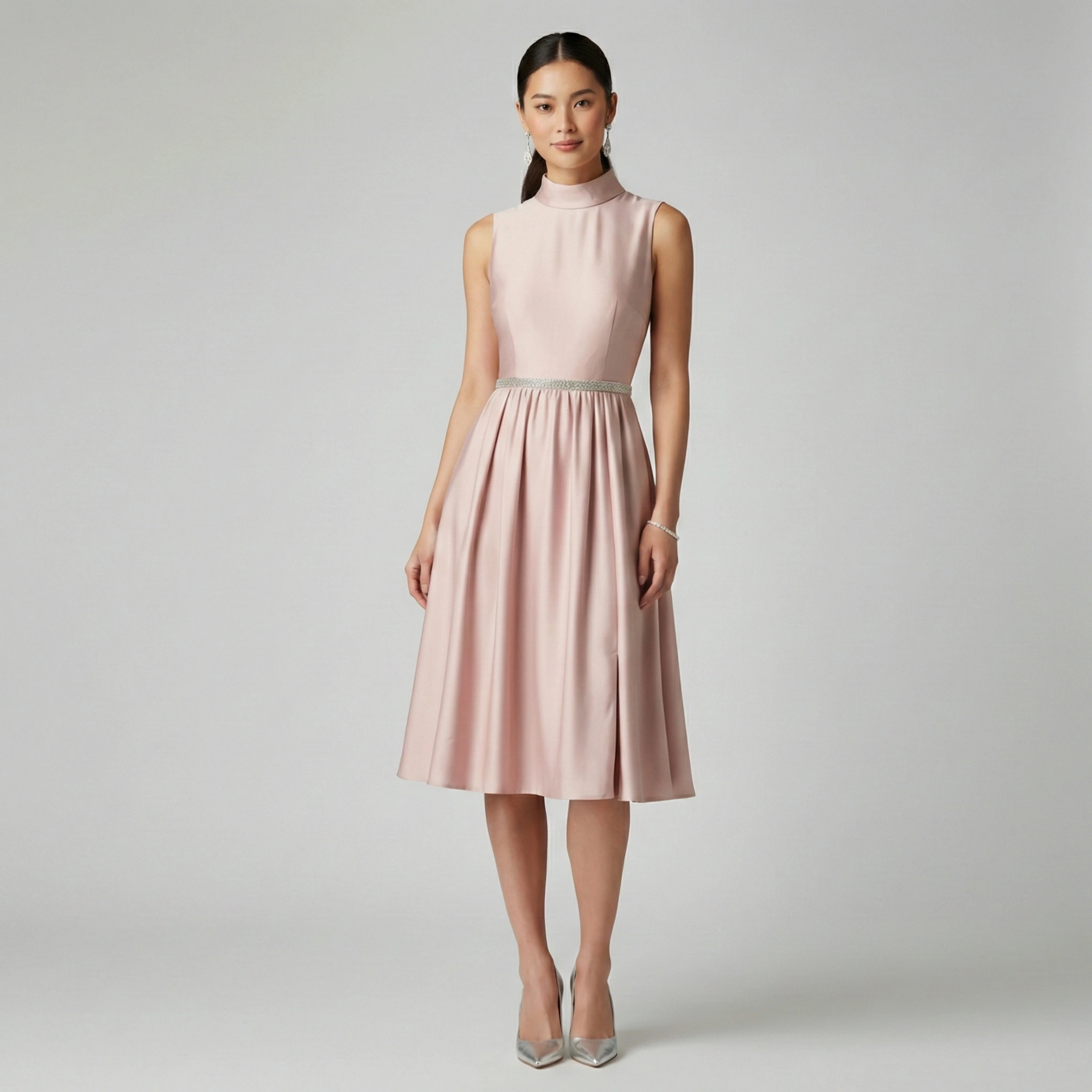
On-model images show garments worn by a human model, providing real-world context.
Strengths of on-model images
On-model photography excels at:
- Communicating fit and silhouette
- Showing how fabric falls and moves
- Helping shoppers visualize themselves wearing the item
- Reducing size and style ambiguity
For apparel categories, on-model images consistently outperform flat lays in terms of buyer confidence and conversion rate.
Limitations of on-model images
On-model photography can be:
- More expensive to produce
- Slower to scale across large catalogs
- Less consistent if models, lighting, or styling vary
Without a standardized visual system, on-model images can introduce inconsistency rather than clarity.
What converts better in fashion ecommerce
For most apparel categories, on-model images convert better than flat lays.
This is because on-model images answer the most important buying questions earlier in the decision process. When shoppers understand how a garment fits and looks on a body, they hesitate less and move to checkout faster.
Flat lay images alone rarely provide enough context to support confident apparel purchases, especially for first-time buyers.
Platform behavior matters
Shopify and brand-owned stores
Shoppers on brand-owned stores tend to explore collections and compare products within the same brand.
Best-performing product pages usually include:
- An on-model hero image as the first visual
- Flat lay or detail images to support design clarity
- Consistent styling across the catalog
On-model images build trust and brand credibility, while flat lays reinforce details.
Marketplaces and fast decision environments
Marketplace shoppers compare multiple brands quickly and make decisions with limited attention.
Listings perform best when they:
- Use on-model images to establish fit immediately
- Include clear flat lay or detail shots as secondary images
- Maintain neutral, accurate presentation
Here, on-model images stop the scroll, while flat lays support evaluation.
The highest-converting approach: combining both styles
The most effective fashion ecommerce listings do not choose one style exclusively.
A high-performing image set typically includes:
- An on-model hero image
- One or two alternate on-model angles
- A flat lay or folded image
- Fabric or detail close-ups
This combination reduces uncertainty, supports different browsing preferences, and increases overall conversion rates.
Impact on returns and customer satisfaction
On-model images reduce returns by setting clearer expectations around fit and proportion. Flat lay images help reinforce details but rarely reduce returns on their own.
Brands that rely only on flat lays often see higher size-related returns and more “not as described” complaints.
Using both styles together creates alignment between expectation and reality, which improves long-term customer satisfaction.
Cost and scalability considerations
While traditional on-model photoshoots can be expensive, modern workflows allow brands to scale on-model imagery without repeating full productions.
By standardizing presentation and using digital or AI-assisted processes, brands can:
- Maintain consistency across SKUs
- Launch products faster
- Control costs while improving conversion
This makes on-model imagery accessible even for growing catalogs.
Final takeaway
Flat lay and on-model images are not competing formats. They serve different roles in the buying journey.
Flat lays support detail clarity. On-model images drive confidence and conversion.
For fashion ecommerce brands focused on growth, the highest-performing strategy is clear. Lead with on-model images to establish fit and trust, then support them with flat lays and close-ups to reinforce details.
When image styles are used intentionally, conversion rates improve and returns decline.
Transform your fashion photography!!
Start Creating with AIRead Next

How Shopify Image Rendering Affects Fabric and Texture Perception
In fashion ecommerce, fabric is value. Weight, softness, thickness, stretch, drape, and finish all ...
The Psychology of Buying Clothes Online (And Why Images Matter Most)
Buying clothes online is not a purely rational decision. It is a psychological process shaped by emo...
Managing Variant Image Logic at Scale in Shopify Catalogs
Variant complexity is one of the most underestimated conversion risks in Shopify fashion stores. As...