Image Consistency Across Collections and Why It Matters More Than Style

Fashion brands often prioritize creative direction for each new collection. Different moods, settings, models, and lighting setups are used to signal evolution and freshness.
Creatively, this can feel compelling. Commercially, it often introduces friction.
In ecommerce, image consistency across collections matters more than stylistic variation. Consistency strengthens trust, improves comparison behavior, and reduces cognitive load during decision-making.
This article explains why visual consistency outperforms stylistic diversity in fashion ecommerce environments.
Shoppers Compare Products Side by Side
Online fashion shopping is inherently comparative.
Customers:
- Open multiple product tabs
- Scroll across collections
- Evaluate variations within the same category
- Compare new arrivals against past favorites
When image styles shift dramatically between collections, comparison becomes harder.
Differences in:
- Lighting tone
- Background color
- Model proportions
- Camera distance
- Color rendering
create visual noise that interferes with product evaluation.
Consistency makes comparison intuitive. Style variation makes it work.
Inconsistency Creates Subtle Trust Gaps
Shoppers interpret consistency as operational discipline.
When collections look visually disconnected, it can signal:
- Production inconsistency
- Lack of system control
- Variable quality standards
Even if the products are strong, inconsistency introduces subconscious doubt.
Trust compounds when visual presentation feels stable over time.
Color Perception Depends on Environmental Context
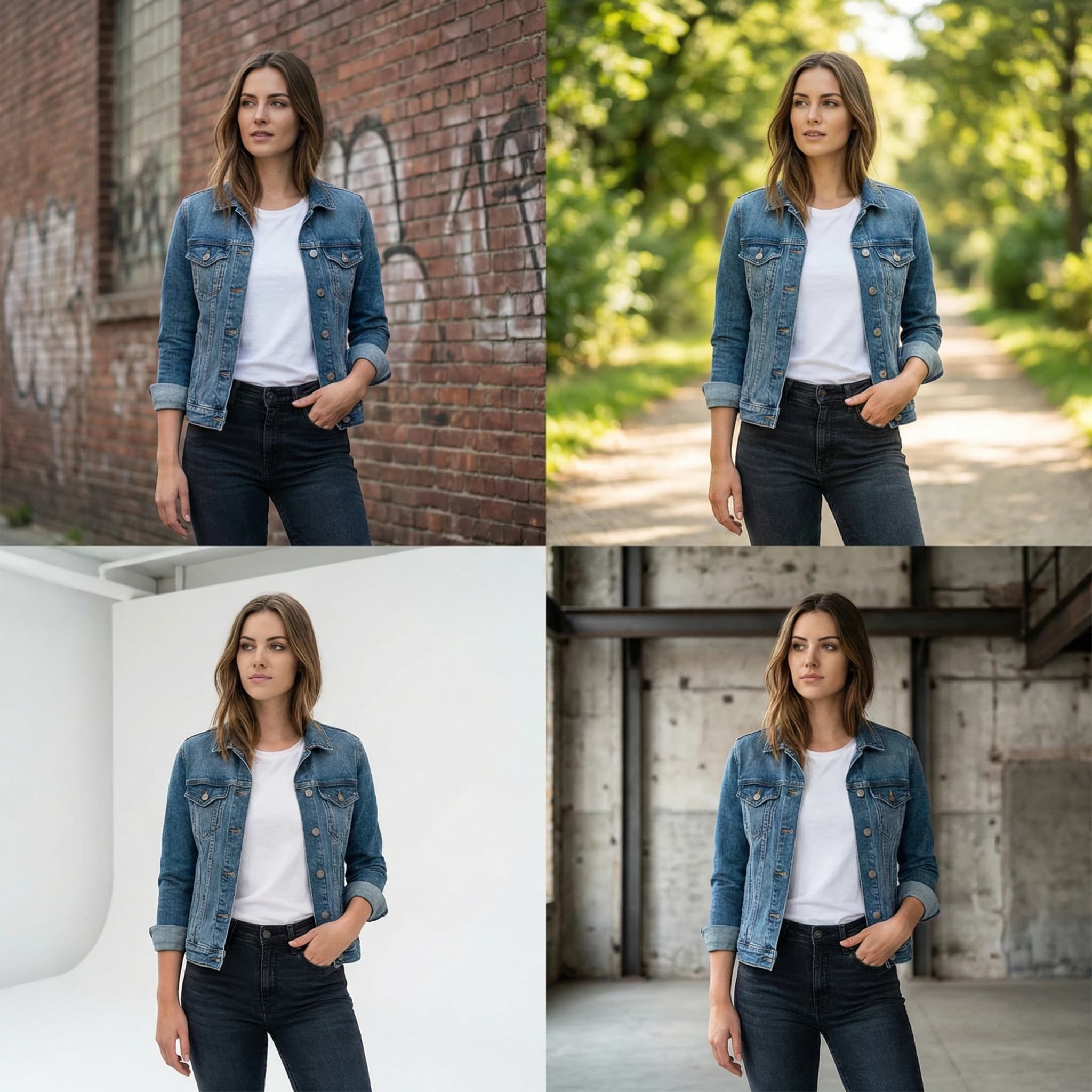
Lighting and background shifts alter how color is perceived.
For example:
- A warm-toned collection may make neutrals appear softer
- A cooler lighting setup may make the same color look sharper
- Dark backgrounds can intensify saturation
- Bright backgrounds can flatten tone
When collections use different environmental setups, customers may misinterpret color differences as product differences.
This increases return risk, especially for repeat buyers familiar with prior collections.
Model Variation Influences Fit Interpretation
Switching model types between collections can affect how garments are perceived.
Differences in:
- Height
- Body proportions
- Pose style
- Movement emphasis
change how customers interpret length, drape, and structure.
Model diversity is valuable, but drastic changes in presentation style between collections can distort comparison.
Consistency in framing and scale maintains clarity.
Style Variation Is Often Internally Driven
Creative teams frequently push for stylistic change to avoid repetition. Internally, repeated formats can feel stagnant.
Customers, however, prioritize clarity over novelty.
A consistent image system:
- Reduces mental effort
- Speeds up evaluation
- Builds recognition
- Reinforces brand reliability
Repetition is not a weakness in ecommerce. It is a performance advantage.
Consistency Strengthens Brand Recognition
Beyond conversion, consistency builds brand memory.
When images follow consistent standards:
- Shoppers recognize products instantly in feeds
- Grid layouts feel cohesive
- Collections reinforce one another visually
Brand recognition in digital environments depends on predictable visual systems.
Style variation may feel expressive, but consistency builds equity.
Operational Benefits of Image Consistency
Consistency also simplifies internal workflows.
Standardized image systems:
- Reduce shoot planning complexity
- Improve catalog scalability
- Lower editing variation
- Simplify onboarding for new team members
At scale, consistency becomes operational leverage.
When Style Should Evolve Carefully
This does not mean brands should never evolve visually.
Style evolution works best when:
- Changes are incremental
- Core lighting and framing remain stable
- Color accuracy standards stay consistent
- Fit representation remains predictable
Evolution should enhance identity, not disrupt clarity.
How to Audit Collection Consistency
Fashion brands should evaluate:
- Do images from different collections feel like they belong to the same brand?
- Are lighting and color treatments consistent?
- Does model presentation follow a defined standard?
- Can customers easily compare products across seasons?
If comparison feels difficult, consistency may be compromised.
Final Takeaway
In fashion ecommerce, image consistency across collections matters more than stylistic reinvention.
Consistency:
- Reduces cognitive load
- Improves comparison behavior
- Strengthens trust
- Builds brand recognition
Style attracts attention.
Consistency sustains performance.
Transform your fashion photography!!
Start Creating with AIRead Next
Why Shopify Theme Design Changes How Product Images Perform
Many fashion brands focus heavily on improving product images while overlooking the environment thos...

Color Accuracy in Fashion Product Photos and Its Impact on Returns
Color accuracy is one of the most underestimated factors in fashion ecommerce performance. Many bran...
What High-Performing Fashion Stores Do Differently With Images
Many fashion brands assume that high-performing stores succeed because they have better products, la...